

From Visitor to Family: Experiencing Jewish Budapest on the Weitzman-JDC Fellowship
A short trip to Hungary turned into something much longer — and more meaningful — for these two rabbinical students.
By Jay Ascher & Jack Rosenberg - Weitzman-JDC Fellows and HUC Rabbinical Students | June 17, 2026
When they embarked on a weekend visit to Hungary in February, Israel-based rabbinical students Jack Rosenberg and Jay Ascher got a deeper look at the city’s vibrant Jewish community than they’d anticipated. In the middle of their visit, global events interfered with their original itinerary, and they stayed on in Budapest for 10 days, immersing themselves in local Jewish life.
Rosenberg and Ascher traveled to Budapest from Jerusalem, where they’ve spent their first year on the Weitzman-JDC Fellowship, an innovative three-year experience which strengthens the value of global Jewish responsibility and sense of Jewish peoplehood among students at Hebrew Union College (HUC).
We recently spoke with Rosenberg and Ascher, who told us about what drew them to the rabbinate, why the Weitzman-JDC Fellowship is an unparalleled opportunity, and how their experience in Budapest demonstrated the enduring value of global Jewish responsibility.
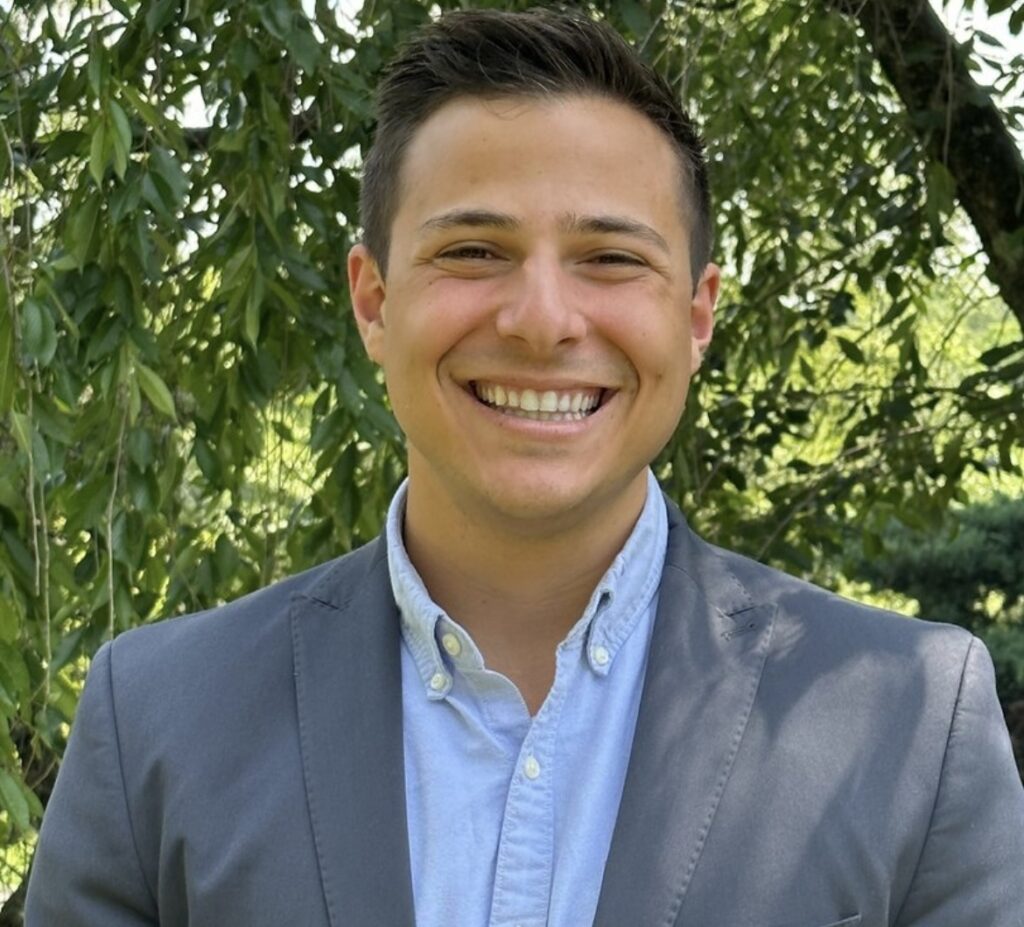
Jack Rosenberg: I come from Washington, D.C., and I went to college studying architecture and art history. I started working at a synagogue, Temple Micah, and walked in on the first day of work. It was, you know, 9 a.m. on a Sunday, and there were little kids pulling their parents into the synagogue because they were so excited to go to the Boker Tov service. It was just completely intergenerational; there was so much light and excitement and color.
I fell in love with the idea that I could help draw people closer to Judaism — and so I decided to come to HUC and become a rabbi.
Jay Ascher: I’ve always been a big fan of two things — Judaism and helping other people. I was born and raised in Maplewood, New Jersey, and got my bachelor’s degree in film and theater. After college, I served as youth director at Temple B’nai Jeshurun in Short Hills, New Jersey, as well as at Temple Israel in Omaha, Nebraska. That inspired me to become a rabbi.
Being a rabbi isn’t a job; it’s my calling. Each day, I get to help people through prayer, being right at their side through good times and bad, and I don’t take this sacred work lightly. That’s why it was my dream to go to rabbinical school at HUC.
JR: Once I got admitted to HUC, I applied for the Weitzman-JDC Fellowship. I was struck by an idea that’s at the heart of the fellowship experience: global Jewish responsibility. Up until that moment, my Judaism was a completely American one (Northeastern, to be more precise). I wasn’t exposed to Jewish communities outside the United States.
For those who don’t know, the Weitzman-JDC Fellowship is a multi-year enrichment experience for rabbinical students at HUC. Through an experience coordinated by JDC Entwine, Fellows meet regularly to learn about global Jewish life and hear about JDC’s groundbreaking work in these communities. In addition, we take a class called Contemporary World Jewry.
Through Weitzman-JDC, we’ve gotten to experience Jewish life in other countries. For instance, all of us got to do a Shabbaton in Thessaloniki, Greece. We got to know this much smaller community and learn how they survived a number of tragedies.
JA: That’s why we were in Budapest, to do a Shabbaton. It was supposed to be just about 48 hours — land on Thursday and take off Sunday afternoon — and we had all these beautiful plans. But it turned into the greatest and most tumultuous 10 days of my life.

Before our plans collapsed, we did get to witness Budapest’s vibrant Jewish community and understand JDC’s role in building it. We saw the beautiful Mozaik Hub, a professional platform for Jewish community NGOs and initiatives. We also also met with some staff from Szarvas, the JDC-Lauder international Jewish summer camp in rural Hungary. Many Szarvas campers grow up not even knowing they’re Jewish. But after attending Szarvas, they return home and teach their parents about Jewish identity and heritage — it’s l’dor v’dor, in a sense.
We came away from these experiences seeing that, despite being nearly wiped out during the Holocaust and completely repressed under communism, Jewish Hungary is blossoming today. They aren’t thinking of what’s going to happen tomorrow— they’re thinking about the next 10 years, 20, 100 years. That’s such a beautiful thing to see.
JR: One Szarvas leader told us about the community’s evolution since the collapse of communism. The first generation, in the early 1990s, would get together to sing maybe one Jewish song. Then, the next generation began exploring Jewish education, learning about holidays, rituals, and history. And today, more than 35 years later, they have weekly Kabbalat Shabbats, Saturday morning services, and a rich array of programming that draws more and more people in. JDC was a foundation for this rebirth.
JA: Everything was going as planned. We were fully immersed in Jewish Hungary … until we started getting push notifications from major news sites: Iran had attacked Israel. We looked at each other and thought, “What if we get stranded here?”
JR: The last stop on our itinerary was a Havdalah service at Moishe House. While we were there, the rest of our cohort was in Israel sheltering from rockets, forced to have Havdalah in bomb shelters. They were … stressed out, to put it mildly. So, together with the friends we’d made at Moishe House, we decided to have Havdalah with our cohort over Zoom. It was a real moment of solidarity between us American Jews, Israelis, and Jews in Budapest.
After that, we were supposed to go directly to the airport, but our flight to Israel had been cancelled. Thanks to JDC’s help, our stay at the hotel was extended in two-day increments — they and the Budapest Jewish community were doing what they do best: helping Jews.
JA: We felt grateful, of course, but we also felt another, trickier emotion. Our cohort was stuck in bomb shelters hearing their buildings shake, while we were still in Budapest getting to know Hungarian Jews. We turned to each other and asked, “Do you feel guilty? I feel kind of guilty.” We’d take a Zoom call with our friends in Jerusalem, and suddenly an alert would go off and they’d say, “We need to go,” and they’d rush down to their miklat (public bomb shelter).
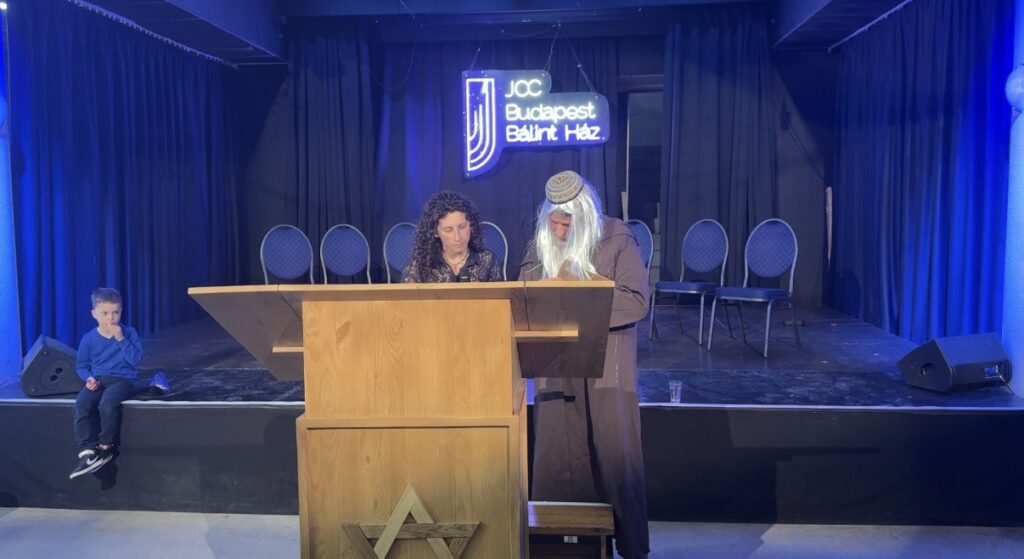
JR: It was this peculiar combination of guilt and uncertainty and appreciation for our fellow Jews and JDC. They were in constant contact with us, not only helping us with a place to stay but asking, “Are you guys OK?” In this dark moment, you suddenly see a ray of light, and it’s coming from this community that JDC had helped grow.
Their help was logistical and financial, but it was also emotional and interpersonal. They asked if there was any more programming we wanted to see and any more Jewish life we’d like to experience.
We ended up doing so much we couldn’t have done in just two days. We celebrated another Shabbat, did a Megillah reading, spent a lot of time at JCC Budapest, attended a play at the Jewish theater, and went out for dinner and drinks with the Moishe House crew, with whom we still keep in touch.
They made us feel like we were one of them. It was a gift.
JA: We were no longer visiting. We were no longer American Jews. We were just Jews — Jews who had now joined their community. They didn’t include us because it was their job; they welcomed us because they said, “You’re a family member. We are together. We are one.”
JR: In every Jewish place I travel, I like to pick up one piece of Judaica. In Greece, I got a dreidel. In Israel, I got a mezuzah. That’s how I want my future congregation to be — a place that appreciates the wealth and diversity of Jewish culture throughout the world.
What I took away from my ten days in Budapest is that it’s not just a mitzvah to care for our fellow Jews — it’s a duty each one of us carries. And though I left Hungary months ago, I’ll always carry that lesson as part of my rabbinate.
Jay Ascher (he/him) is a second-year rabbinical student at HUC. He grew up in Maplewood, New Jersey, and earned his undergraduate degree in Film and Media Studies and Theater from Lafayette College, where he was deeply involved in campus life through the Hillel Society, the Office of Residence Life, and multiple theater productions. His love of storytelling and community-building shaped much of his college experience and continues to shape his Jewish journey today.
Jack Holden Rosenberg (they/them) is a second-year rabbinical student at HUC. They earned their B.A. in the History of Art and B.S. in Architecture from the University of Michigan and founded the award-winning “In the Round Productions,” a student-run theatre dedicated to LGBTQIIA+ stories and storytellers. Jack’s direction and scenic design have been seen throughout the D.C. metro area and southwest Michigan. Jack’s passion is storytelling and narrative. Whether it be the spatial narratives of architecture, the visual and social anthropology of art history, or the empathetic immersion of directing theatre, Jack loves studying humanity through our stories.
Sign Up for JDC Voices Stories
Share


Share
Partners


Give With Confidence


