

“Love with Nowhere Else to Go”: A Tu B’Av Reflection from Kazakhstan
What's the secret to true love? This elderly Jew has an answer you won't often hear.
By Alina Berlimble - JDC Client; Almaty, Kazakhstan | June 22, 2026
After they met each other at a film studio one afternoon, Alina and Boris Berlimble walked arm in arm through 68 years of marriage. Together, they raised a family, had successful careers, and cared for each other when they were sick. Today, Alina lives all alone — Boris died earlier this year at the age of 95 — and receives assistance from the JDC-supported Hesed Polina social service center in her native Almaty, Kazakhstan.
As we celebrate Tu B’Av, the Jewish day of love, Alina, 90, looks back on her many years with Boris, describes JDC’s crucial role in their lives, and shares some hard-earned wisdom about the nature of love.
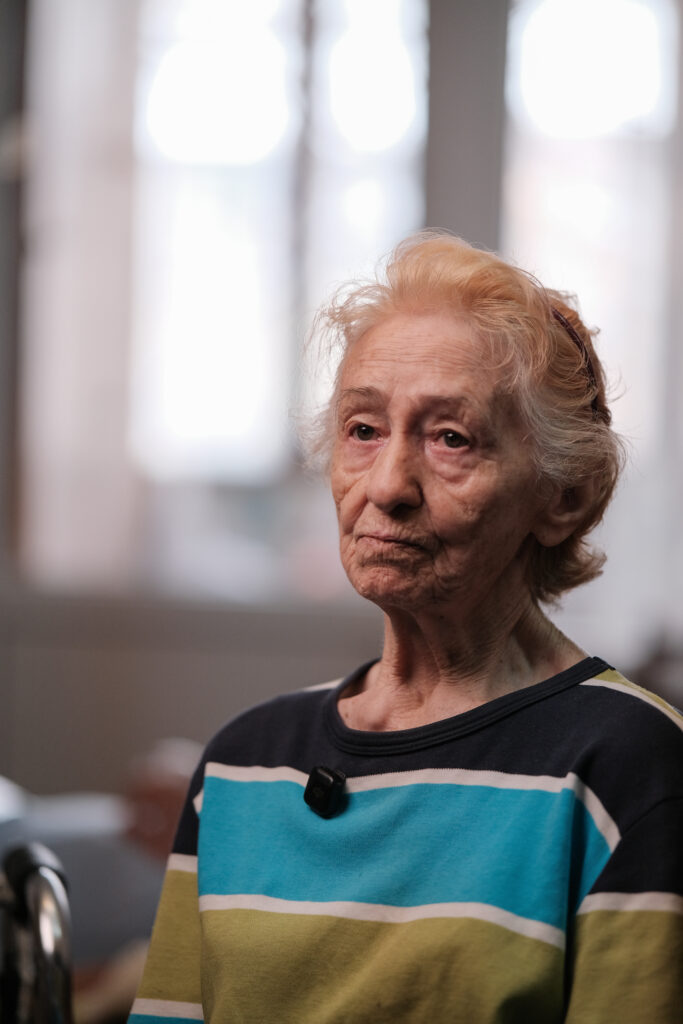
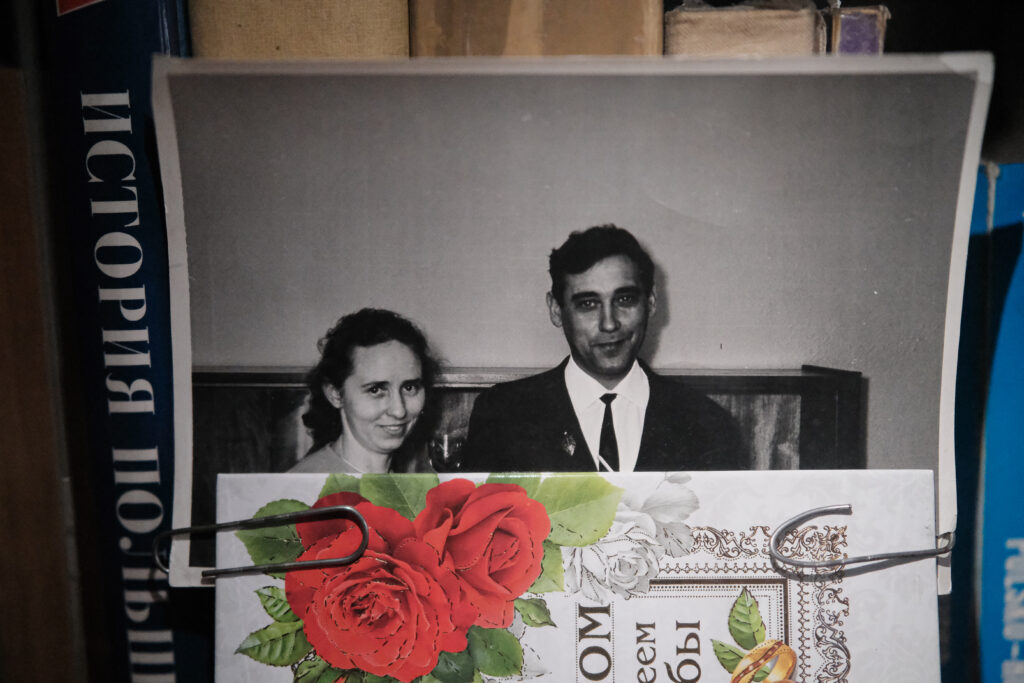
Boris entered my life by chance. We met on the grounds of a film studio, where he worked after returning from military service. One day he phoned me and said, “Maybe we should go to the movies?”
That’s how it all started. That’s how we became friends. That’s it. We were together 68 years.
It was his sense of decency that attracted me to him. Decency, I think, is the most important quality, and Boris was the most morally upright person I’d ever met. He wasn’t a man of many words, but when he spoke, he spoke well. A lot of other girls liked him because, well, he was handsome, with gentle, pleasant features. Unfortunately for them, he proposed marriage to me, and I accepted. We got married in January, and our son was born in October.
You learn a lot in 68 years of marriage. Over time, I understood that you need to combine love with patience. An idea would pop into Boris’s head — he’d want to see something, he’d want to go eat something — and he’d want to do it immediately. I also learned you shouldn’t hold your partner too tightly. When you pressure them or express jealousy, it only pushes them away.
When his mother moved in with us, I learned more about his childhood. His family had spent three years under Nazi occupation. They had no home and hid out in the forest because the Nazis had issued orders to kill all Jews. No one was spared, not even people in mixed marriages. That’s how it was.
They hid for three years, going from village to village. They were chased by dogs the Nazis had sicced on them. To prevent the dogs from picking up their trail, they’d walk across a freezing river where the beasts couldn’t reach them. The Nazis shot Boris’s grandmother and grandfather; he was supposed to be shot, too, but escaped. He never spoke about it.
Boris and I never received financial assistance from any of our parents — we came from humble backgrounds — but what they lacked in material riches they made up for in hard-earned wisdom. They guided us. They warned us. Listening to them, I began to feel, really feel, that you only get one life. You shouldn’t waste it. (Not a second of my life was wasted with Boris.)
This lesson came back to me with a sobering force when Boris developed health problems late in his life. Everything became difficult. He could barely walk to the kitchen. I’d struggle to go to the store, telling him, “Sit quietly, don’t walk around,” because without me, he might’ve fallen.
I protected him from everything. If a friend had died or I’d heard something awful in the news, I never shared it with him. He took everything to heart, especially other people’s misfortunes.
I was closer to him then than I’d ever been. Before, when he was still working, he had business trips, errands, and professional obligations. But as the end came near, we spent all our time together. His eyesight and hearing worsened, and I’d turn up the radio so he could listen. If I didn’t like what was on, I’d never say, “Switch it to something else.” No. I tried everything I could to make him feel my love and respect.
I worked for decades as an economist. Boris managed a television store. But when we retired, after years of making our own way, we ended up with nothing but our meager pensions — not even enough to cover basic necessities like food and medicine. This made our lives especially difficult when Boris got sick.
Without JDC’s help, our situation would have been much worse. Given that Boris was homebound, and that it was challenging for me to go outside and run errands (and still is), I never knew if Boris’s basic needs would be met.
You learn a lot in 68 years of marriage — namely, the need to combine love with patience.
Thankfully, JDC provided a homecare worker, easing the massive burden placed on my shoulders. Throughout Boris’s decline, she helped with household tasks I simply couldn’t complete, delivered food and other necessities, and ran to the store and got Boris whatever he needed. With her help, I could rest easily knowing my beloved husband had reliable, professional care. And I’m grateful to JDC and the Claims Conference — the organization’s partner in caring for Holocaust survivors like my Boris — for their continued, unwavering support.
When I was recovering from a stroke and couldn’t walk properly, Boris took me for strolls along the river near our home. He did this every day for more than a year. Because of him, I survived, and when he got sick, I cared for him in turn. What else is that, but love?
My nine decades on earth have taught me that love cannot be quantified or defined or manufactured — only experienced. And if you can know love, then you can also know grief, which is just love that has nowhere else to go.
Boris and I were in love until the very end. I still am, and this feeling has no outlet. Each moment without him is hard, but let me tell you this: I’d take this grief any day over never having met him at all.
That’s the bittersweet truth about love. The pain is only as deep as the bond you shared; it hurts as much as it was worth.
Alina Berlimble, 90, is a JDC client in Almaty, Kazakhstan.
Sign Up for JDC Voices Stories
Share

Share
Partners


Give With Confidence


